We’ve all been there. It’s 6:00 AM, you’re trying to sneak out for an early shift or a morning gym session, and you hit the garage door button. Suddenly, it sounds like a haunted house just opened for business. That piercing screech or heavy grinding doesn’t just wake up your family—it probably alerts the neighbors three doors down, too.
A noisy garage door is more than just an annoyance. Usually, that racket is your door’s way of telling you that something is rubbing, grinding, or wearing out. The good news? You can fix most of these sounds with a little bit of weekend DIY.
Here are the five most common culprits behind a loud garage door and how you can bring back the silence.
1. Dry or Gritty Moving Parts
Most of the time, a “screaming” door is just thirsty for some oil. Your door has dozens of moving parts—hinges, rollers, and springs—that rub together every time the door moves.
The Fix: Don’t reach for the WD-40; it’s actually a cleaner and can degrease your parts further over time. Instead, grab a can of silicone-based lubricant or white lithium grease. Spray a small amount onto the hinges, the metal rollers (specifically the bearings), and the full length of your torsion spring. Wipe away any excess so it doesn’t drip on your car.
2. Loose Nuts and Bolts
Think about how many times your garage door opens and closes in a year. All that vibration naturally looses the hardware over time. If you hear a rhythmic “clinking” or “rattling,” you likely have some loose parts.
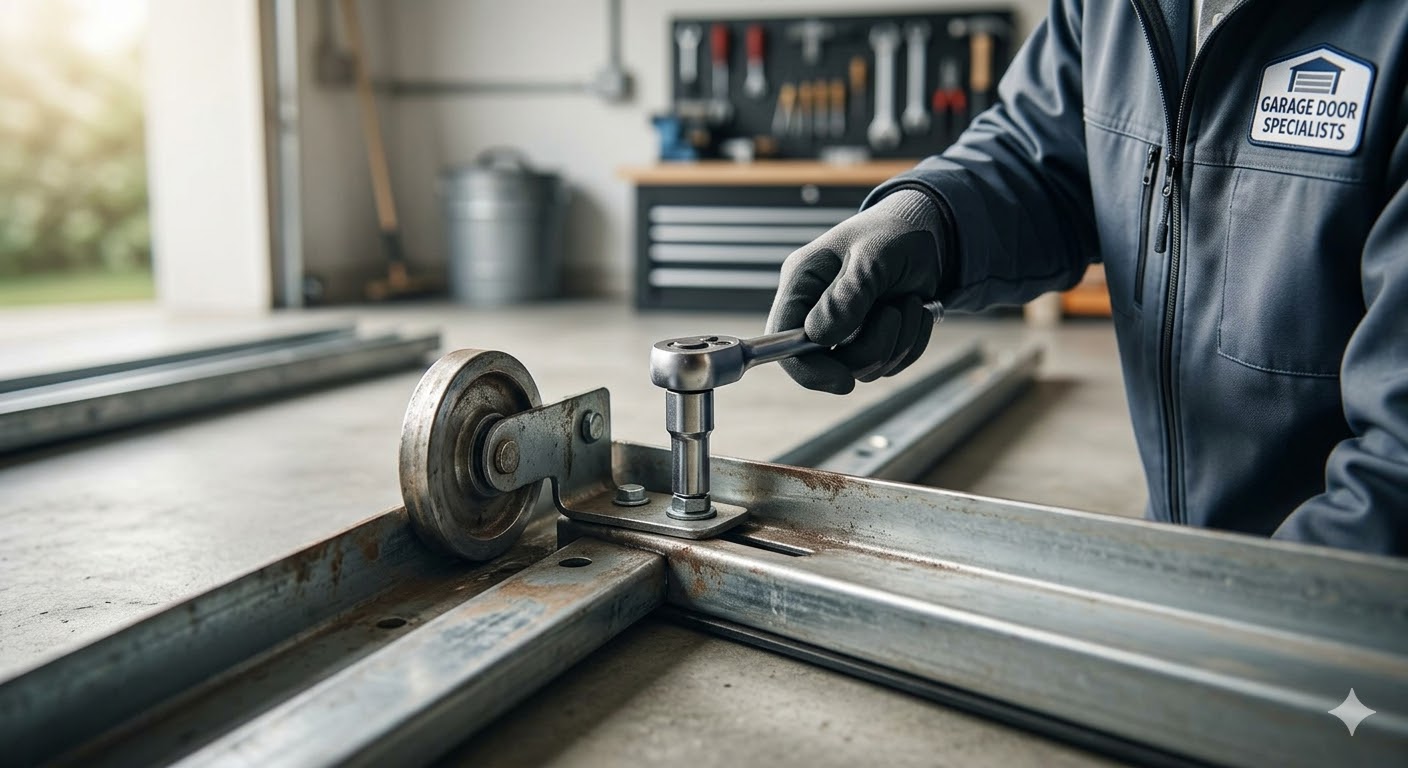
The Fix: Grab a socket wrench or an adjustable wrench. Walk around and check the bolts on the tracks and the brackets that hold the hinges to the door. You don’t want to over-tighten them and strip the metal, but a snug fit will stop those vibrations in their tracks.
3. Worn-Out Metal Rollers
If your door makes a loud, rolling metal-on-metal sound, take a close look at the rollers that slide inside the tracks. If they are older metal rollers, they tend to get noisy as the internal bearings go bad.
The Tip: If it’s time to replace them, skip the metal and go with nylon rollers. They are significantly quieter, they don’t require as much lubrication, and they’ll make your door feel like it’s gliding on air.
4. A Noisy Chain Drive Opener
Sometimes the noise isn’t coming from the door itself, but from the motor. If you have a chain-drive opener, that “clank-clank-clank” is the sound of a metal chain slapping against a metal rail.
The Fix: Check the tension of the chain. If it’s sagging, it’s going to hit the rail and make a mess of noise. If you’ve tightened it and it’s still too loud, your next upgrade should be a belt-drive opener. They use a rubber-reinforced belt instead of a chain, making them almost silent—perfect if there’s a bedroom located right above the garage.
5. Vibrating Tracks
If the tracks that guide your door aren’t perfectly aligned or have become slightly bent, the rollers will “jump” or rub against the sides, causing a deep rumbling sound.
The Fix: Check the tracks for any debris, dried grease, or small stones that might have gotten lodged in there. Use a damp rag to wipe the inside of the tracks clean. If you see a visible bend in the metal, you might be able to gently straighten it with a rubber mallet, but be careful not to make the bend worse.
Giving Your Ears (and Your Neighbors) a Rest
Taking thirty minutes to tighten a few bolts and spray some lubricant can add years to the life of your garage door. Not only will it save you money on major repairs down the road, but it also makes coming and going much more pleasant.
A quick word of safety: While tightening a hinge or lubing a roller is a great DIY task, please be careful around the garage door springs. Those springs are under an immense amount of tension. If you notice a broken spring, or if the noise seems to be coming from the heavy lifting cables, it’s time to put the tools down. For the high-pressure stuff, give us a call—we’re happy to handle the heavy lifting so you can stay safe and enjoy a quiet home.